Questions? Thoughts? Concerns? Please reach out!

The future of crop protection

February 2, 2026
Written by:
Mr. Peter Klapwijk, Green Architect and Connector with a vast growing history.
Mr. Peter Klapwijk, Green Architect and Connector with a vast growing history.

The future of crop protection is moving in a very different direction than the chemical-heavy model of the past. Pesticides, chemicals, and other blanket spraying methods might ensure that crops grow and survive until the harvest, but they also have health effects on consumers. As these effects are being discovered, consumers and supermarkets are becoming more critical of chemicals and are looking for cleaner, healthier produce.
Growers will need to find new, healthier methods to protect crops from diseases, pests, and fungi. You cannot wait until the future arrives to make these changes. Read on to learn about the strategies you should implement today.
Social and political developments against chemicals
Around the world consumers and governments are increasingly shifting away from chemical crop protection. Concerns about food safety, environmental health, and biodiversity have led to demands for less chemical residue and more natural farming practices. Governments are tightening regulations and even banning some widely used pesticides. At the same time, supermarkets are often going beyond legal requirements to set sustainability standards and push growers to find cleaner solutions for crop protection.
Preventive policies in crop protection
The key to minimizing the use of chemicals and pesticides is to reduce your need for them. This requires changing your mindset toward proactive strategies rather than reactive.
Proactive strategies focus on preventive policies for stopping pests, diseases, or weeds before they can cause any damage. Preventive policies can greatly reduce risk, chemical dependency, and costs.
There are several preventive policies that have proven extremely effective in protecting plants with no chemicals whatsoever. Here are a few:
- Biological controls: Using biopesticides such as microbes, specific fungi, and plant extracts, as well as beneficial insects that eat pests in your greenhouse, is one of the most popular preventive methods in greenhouses today. Biological controls are fully natural and can be very effective in stopping pests and diseases from spreading.
- Insect netting: Covering your greenhouse and its entrances with netting is an effective way to stop pests from entering. Ensuring there is an adequate barrier between your crops and potential pests greatly reduces the chance of them meeting.
- Roll traps: Even with netting, some pests will still enter your greenhouse. To prevent them from infecting your plants, you can strategically place sticky roll traps that attract and catch pests.
- Plant hygiene: Cleanliness eliminates the risks of diseases and pests from sticking around in your greenhouse between seasons. You must properly clean out your greenhouse between seasons and ensure there is no remaining foliage. Don’t forget to remove foliage from outside your greenhouse, as this foliage may encounter new plants that you will bring the following season.
- Comparting: Growing plants in different compartments is an important method for preventing the spread of disease. If a plant becomes infected, comparting will simplify containing the infection and ensure that only one compartment, rather than your entire greenhouse, is impacted.
- Resilience: Crop resilience is the key to preventive policy. Let’s look deeper at that in the next section.
Resilience is key to chemical-free growth
Pests and pathogens cannot be eradicated completely. There will always be threats against your crops. However, rather than fighting these threats, the key to protecting your crops lies in growing strong, resilient crops.
Strong crops that transpirate enough and get the right balance of nutrients will have thicker cell walls, which make them more resistant and less likely to collapse when pests or fungi attack.
There are several ways to raise resilient crops:
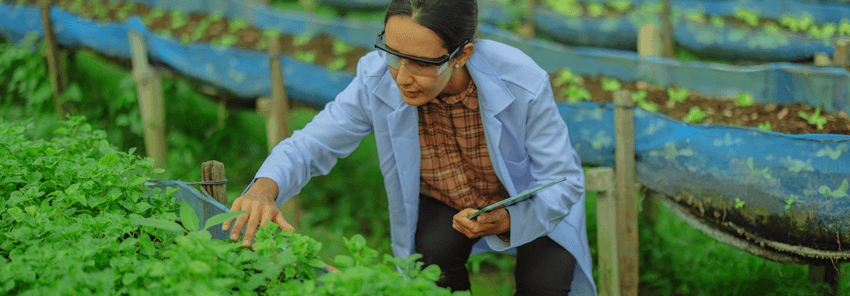
- Select resistant varieties: Some crops have better resistance to disease and pests than others. When you choose which varieties you will grow in your greenhouse, focus on ones that have already proven resilient.
- Graft resilient varieties: Grafting leads to more resilient crops because plants benefit from multiple immunities.
- Ensure adequate nutrients: A well-balanced supply of nutrients with sufficient calcium and potassium helps plants build strong walls and resist diseases.
- Attend the roots: A strong root system leads to better nutrient uptake. Adjust humidity and substrate structure to support root development. Dosing biostimulants is also useful.
- Manage plant stress: Use screens, lights, and other tools that will create a minimal amount of stress in plants, giving them adequate opportunity to thrive.
Resilient crops will need significantly less chemicals and pesticides.
Measures to maintain crop health
Even if you have resilient crops and have enacted all the preventive policies discussed herein, you must constantly monitor to ensure your crops are healthy. When using chemical pesticides, you may have been able to keep your eyes closed for the season and trust your crops would be disease and pest free, but that is not the case when you grow healthier, cleaner crops. This requires a much more hands-on approach. You will need to monitor and scout in your greenhouse constantly to ensure that all plants are healthy and no pests or diseases have taken root.
This might be a lot of work if you are only doing it with your eyes. However, there are many tools you can use to make monitoring easier. Here are a few:
- AI sensors and robots: Robots with cameras, sensors, and the ability to recognize pests and the signs of diseases greatly improve the efficiency and effectiveness of monitoring. These robots can work around the clock in any condition and continuously monitor each plant for any imperfections.
- Sticky cards: If you hang sticky cards throughout your greenhouse, you can monitor which insects are in your greenhouse. Once a week you can count how many insects were trapped on your sticky card; how many are pests; and how many are part of your biological control. If you use a sticky card with a grid, it makes it easy to extrapolate and get a picture of how many pests are in your greenhouse and if your biological controls are effective.
- UV lighting: Some fungi and pathogens fluoresce under UV light. UV lighting can also reveal cell damage in crops before it is visible to the human eye. A UV light can lead to early detection of future problems.
There are many innovative tools on the market today that make monitoring simple. You can look into different technologies and techniques and decide which you prefer.
Chemicals are a last resort
Even with all your preventive measures in place, you might still find that pests or diseases have infected your crops. However, because of your monitoring strategy, you should know exactly where the infection is and you can target your chemical usage to a specific compartment. Instead of spraying everywhere, you will spray just the impacted area, greatly minimizing your chemical usage.
Early identification and intervention will reduce the spread and impact of any infection in your greenhouse. If you need to use chemicals to stop the spread, then do so in a highly targeted manner. You’re still using much less than you might have without all these strategies in place!
Practical steps toward chemical-free crop protection
Mastering these crop protection strategies is challenging even for the most experienced grower. But that should not stop you from implementing them next season. Start by taking inventory of how many chemicals and pesticides you are using today. Next, develop a plan for which strategies you will implement next season. At the end of every season, you must analyze your efforts and their effectiveness. Be honest with yourself about what worked and what didn’t. Measure your chemical and pesticide use. Once you have a clear picture, reevaluate your strategy and create a new plan for the next season.
It might take a few seasons before you get your stride, but the sooner you start, the sooner you’ll be ready to supply clean and healthy produce that goes above and beyond the regulations and meets consumer demands.