Questions? Thoughts? Concerns? Please reach out!

Circularity in production: expensive hype or meaningful trend?
May 7, 2026
Written by:
By Peter Klapwijk
By Peter Klapwijk
Concern for our planet has become a defining value in our modern world. As awareness about waste’s impact on our environment becomes more prevalent, organizations all along the supply chain from producer to consumer are looking for more sustainable options.
For growers, sustainability means implementing circular systems. While implementation can be expensive and seem negligible, it can actually have a significant impact on your bottom line, and not to mention, the planet. Read on to learn more.
What is circular production?
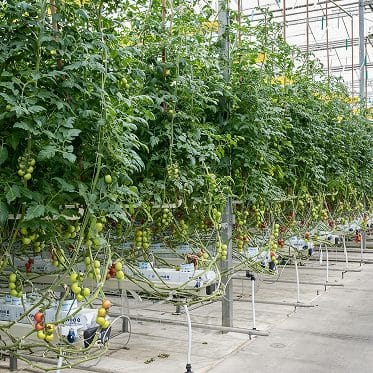
Circular production eliminates waste and reuses materials through a closed system. That means that anything that is not used in one cycle will be recycled through the closed systems and used again. Here are several items that can be circularly recycled in greenhouses:
- Substrates: Used organic substrates can be recycled as fertilizer in outdoor fields.
- Water: Drain water can be recirculated through the irrigation system.
- Fertilizers: Organic fertilizers can be created from plant and animal waste products. Unabsorbed fertilizers can also be recycled through irrigation systems.
- Biostimulants: Optimizing microbiomes in the root environment will result in a better nutrient uptake and a more resilient crop.
- Biological control: Using biological control and agents whenever possible, significantly reduces the use of chemical agents.
Some aspects of circularity can seem expensive to implement. For example, purchasing organic fertilizers might have a higher upfront cost, and implementing new systems for recycling water might require some investment. But sooner or later, your greenhouse will have to jump on this trend. The sooner you do it, the sooner you’ll see that you will actually save and make more money.
The effect of greenhouses on Mother Earth
TAre greenhouses good for Mother Earth? Well, that depends. They can be efficient growth environments for producing food close to consumers. However, greenhouses can also use a lot of energy and a lot of plastic if growers don’t use biodegradable accessories.
Greenhouses that implement circular systems that reuse drain water, fertilizers, substrates, and biological controls protect our earth. Mother Earth’s resources are not infinite. In fact, in January, the United Nations predicted that our world is approaching a “water bankruptcy” in which much of the world will not have access to safe drinking water. Much of this looming bankruptcy is attributed to drain water in agriculture that is not recycled.
If we want to avoid this crisis, greenhouses must recirculate drain water and reduce wasted resources.
The consumer foodprint
Foodprint is a modern buzzword for your food footprint, or the environmental impact of the food you’re eating. Food production creates CO2, wastewater, and impacts our ecosystem.
In the past, consumer awareness of their foodprint was a niche concern, but today it is becoming more mainstream. Just look at any grocery store to see how organic sections have grown and how many products boast their sustainable production.
With the changes in grocery store practices, sustainable products are now convenient, even if more expensive. However, many consumers are willing to invest more in products that are healthier for their bodies (fewer chemicals), healthier for the environment (less waste), and reduce their foodprint.
Sometimes as growers, we feel disconnected from the end consumers. There are several steps in the supply chain between our greenhouses and those who will eventually buy and eat our products and therefore we don’t always get the chance to understand our consumers’ preferences. But if you pay attention to social trends and current news, you will see all the online buzz about foodprint.
Another option is to open your doors to consumers. Invite them to your greenhouse, show them your products, and ask about their priorities. It is almost guaranteed they will ask something about sustainability.
The cost of circularity
One often cited disadvantage of circularity is price. It costs money to install circular systems and leads to more expensive products, which can reduce the number of buyers. However, we will challenge that. Circular greenhouses are less reliant on commodity prices because they buy less. They buy less water, fewer fertilizers, and fewer other required resources. Being less reliant on prices makes circular growers immune to changes in world markets, meaning growers can provide a steadier price to distributors and consumers. While upfront costs might be high, growers spend less money each season, meaning eventually their prices and margins will be attuned to the market and attractive to consumers.
If cost is still holding you back, think of the cost to our planet of not going circular. That cost, in the long run, will be infinitely greater if we run down our resources.
Go full circle with biodegradable accessories
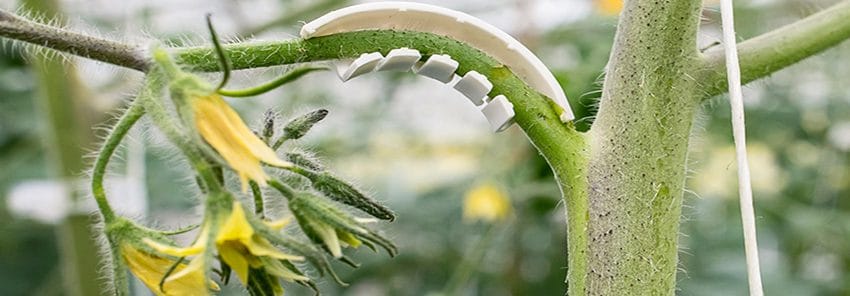
Even if you install fully circular systems, not everything can be reused. For resources that can’t, use biodegradable options. Biodegradable items break down naturally into simple, non-toxic substances like water, carbon dioxide, and other organic matter by way of microorganisms like bacteria and fungi. They decompose naturally in a reasonable timeframe without leaving any residue or impact on their environment.
Many greenhouse accessories, including clips, arch supports, and twine have biodegradable alternatives that are as strong and effective as their counterparts. Paskal’s biodegradable greenhouse accessories are extremely durable and simplify your cleaning process at the end of a season.
So, circularity: hype or trend?
Circularity is here to stay. There is no other option if we want to protect our world. The sooner you start, the easier it will be and the sooner you will start seeing the impact of lower costs and higher desirability in the eyes of consumers.